Tuesday, April 7, 2020

3rd December 2015 - Kolhapur to Bangalore


This stretch would be our longest drive, about 62o Kms to home in Bangalore. We decided to leave early as we expected that we would take atleast 11 hours including stops in between. Checked out of our room at 5:30 AM we were able to commence our journey at 6 AM after loading our luggage.

In a short while we were out of Kolhapur and on the highway heading towards Bangalore. The roads were excellent and with very little traffic and this helped us cover 85 Kms in the first hour of driving. Elated with the prospects of a long drive cut short by a few hours we kept on.

A few hours down the road we came across a Kamat, we decided to stop over for breakfast, hot idlies and sambar. We were the only customers that early in the morning and we were back in the car in 15 minutes flat, good timing.

The stretch between Kolhapur and Bangalore is dotted with Kamat Upachars and one need not worry about food on the road.

Is there a reason why there is not much traffic on this road? Or is that all there is?

We lost a about 10 minutes when we getting on to the bye pass at Harikere(?) the bywe pass went through narrow small town roads and soon after entering the road there was a question in our mind if we were on the correct road, as we saw traffic heading towards Kolhapur towards our right. We did not look too keenly for traffic going towards Bangalore :) So we traced back and checked and rechecked and got back on to the same road with doubt in our minds, in about 50 minutes we were on the 6 lane road that we were used to. A signage at this point would have been welcome and saved us a few minutes.

The bye passes and the flyovers and bridges and quality of road and little traffic shortened our time in the car by about 3 hours. We reached Bangalore in about 7 hours. This stretch was typically what we would do on our road trip every day except that it was longer by about 170 Kms but the time taken was only a little longer and not as much as we expected. We were prepared for a long and gruelling 10 hours on the road.

The entry into Bangalore was a breeze, signages pointed us clearly in the right direction and all we had to do was to take the NICE road and head home.

Once on the NICE road we relaxed our pace and headed towards Kanakapura road exit, the Vasudev Adiga restaurant a little further in was inviting and we stopped for lunch.


White Water Rafting in The Ganges - Rishikesh

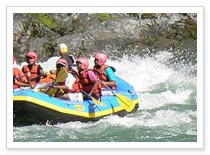
Karthik, Mukund, Siva, Velu and I came down to Rishikesh on the 13th April 2017, after our trek to the Kuari Pass. On the 14th April morning we were driven towards Srinagar about 10 Kms from Rishikesh where we were dropped by our car. There were many rafts waiting to commence their adventures and there were so many excited humans walking towards the rafts. To access the rafts one had to carefully go down the banks of the Ganges, since monsoon was a few months away the water level in the Ganges was low and we had to go down the dry banks and walk across the dry river bank to where the rafts were.

Our Capt. Mahaveer briefed us on safety and we were expected to do, this tool over 30 minutes and later we were thankful that he did his job thoroughly and we listened to him carefully.  


We were to cross a few rapids in what was to be our 10 Km long rafting experience.


There were many rafts waiting for customers and adventurers.  Ajay Bhatt has booked us with “Red Chilli Adventures” and we had Mahaveer who was our Captain. We donned our life jackets and helmets, took hold of the oars and went to the raft. Mahaveer gave us a 30 minute instructions on safety, dos and don'ts and what to do in an emergency while on the raft.

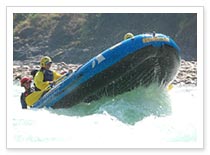
The first few metres were slow and pleasant and then slowly the raft gained speed and we were soon in our first rapid which was not tough. It was at the WALL that Karthik fell into the waters. The raft plunged into the waters and when it came up it did so at an angle causing me to fall into the raft and at the same moment Karthik fell out into the waters. I extended my hand and tried to hold him but was not able to do so. Swiftly Velu took hold of his hand but Karthik was already holding onto the lifeline running around the raft. Mahaveer shouted for me to get back to my seat and in a bound he came to where Karthik was in pulled him into the raft. We did not have time to even be a little scared as Mahaveer shouted out saying “forward forward” rapid coming up. Would we do this again, Yes Yes Yes. I do feel bad that I did not allow the team to jump into the Ganges though Mahaveer assured us it was safe, the shock of having seen karthik in the thundering and swirling waters of the Ganges and so close to rocks had got me worried and I shouted out to others that they were not to get into the water.


You will notice one of the Red Chilli Adventures team members in a kayak handing over slippers to Mukund, these were Karthik's slippers which fell into the Ganges along with him.


Here is a short description of the rapids we went through.

Ganga River RapidsGanga River Rapids

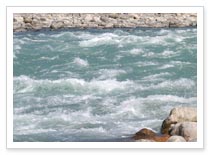
The Ganga gorge gives rise to 13 adventure-packed white water rapids. All of these rapids have been classified into different 'classes' or 'grades' according to the International Scale of River Difficulty. These rapids have been categorized into Grade I, Grade II, Grade III and Grade IV. Rafters can choose to raft along rapids that fall under a specific grade. Depending on their physical stamina and age, they can select a grade and enjoy white water rafting along the Ganges in Rishikesh. Given below are some more details on each of these grades and what type of river rapids they stand for. 

SWEET SIXTEEN
This is Grade I rapid, small and easy. Kids, non-swimmers and first timers can easily raft down the Ganges rapids of this category. Grade I rapids are easy because they offers clear passage to rafters. Apart from a clear rafting passage, these river rapids are also devoid of any serious obstacles. Sweet Sixteen is the right choice if you want to combine a genuine taste of adventure and lots of family fun. 

CROSS FIREGanga River Rapids
This is a Grade III rapid. It comes along with serious obstacles including multiple high, irregular waves and rocks. Though passages are clear, they are narrow creating difficulty for the rafter. Expertise is needed to enjoy white water rafting along rapids of this grade. The operator of the boat needs to have prior experience and expertise. 

THREE BLIND MICE
Much popular among young rafters in Rishikesh, the rapid also falls into Grade III rapids. The river passage along this rapid is clear. However, it features narrow waterway which requires prior rafting experience to sail along. 

THE WALL
Another popular Ganga rapid falling into Grade IV is the Wall. If you want to really feel that adrenaline rush and enjoy your expedition at the same time, the rapid is made just for you. Before you start to sail along this river rapid, do consult your instructor for expert advice. Prior experience is necessary if you are eager to run along this rapid.


Ganga River RapidsGanga River RapidsGanga River Rapids

ROLLER COASTER 
These are Grade III rapids. They are longer with high and irregular waves. There are serious obstacles like dangerous rocks and boiling eddies. The passages are difficult to scout. Maneuvering along these requires power and accuracy. The boatman must have expertise while the raft and rafting gear should be of superior quality. 

GOLF COURSE
The rapids fall into the category of Grade III rapids. If you are an adrenaline junkie and well versed with the techniques of adrenaline pumping river rafting, Golf Course is just waiting for you. Sailing along this difficult passage of Ganga rapid requires both power and precision of the sport. Before you start to run this rapid, make sure you have adequate expertise and are equipped with all the essential rafting gear. 

We were soon back in our rooms changing clothes and in a short while ready to go out into Lakshman Jhula to explore that part of Rishikesh. After walking around a bit I suggested that we walk to the Beatles Cafe for lunch, this restaurant is very popular with foreigners and serves great vegetarian continental food. The dining area is in a room which is open to the Ganges and offers a great view of the rapids. We sat down and ordered our food which everyone enjoyed. We were soon ready to return to the room and we planned that we would rest for a short while and then leave for Hardwar at 4 PM to witness the Ganga Aarti. 


9th Dec 2016 - Kyaikto - Yangon

9th Dec 2016 - Kyaikto - Yangon


All bags were packed, loaded onto the cars and we left the Eternity Resorts and Hotels at around 8 AM so we could reach Yangon early.  The food in Myanmar is closer to Indian food than Thai food so many of us in the group were more comfortable with the breakfast, which was served at 7 AM.

The cars were driven in a convoy and would be on the road for about 4 to 5 hours including stops for tea and conveniences.


10th Dec 2016 - Yangon to Nay Pyi Taw

10th Dec 2016 - Yangon to Nay Pyi Taw


Saturday, December 10, 2016

8th Dec 2016 - Myawaddy to Kyaikto (Golden Rock)


8th Dec 2016 - Myawaddy to Kyaikto (Golden Rock)


Three ministers of the Myanmar Govt flagged us off from the Hotel Grade One where we were staying.

View from our room in Hotel Grade One

Part of the Musicians group

Musicians and the ancers

Mahalakshmi having Thanaka applied on her face.
So, what is Thanaka?

The wood of several trees may be used to produce thanaka cream; these trees grow abundantly in central Myanmar. They include principally Murraya spp. (thanaka) [2] but also Limonia acidissima (theethee or wood apple).[6] The two most popular are Shwebo thanaka from Sagaing Region and Shinmadaung thanaka from Magway Region. A more recent contender sold as a paste is Taunggyi Maukme thanaka from southern Shan State. Thanaka trees are perennials, and a tree must be at least 35 years old before it is considered mature enough to yield good-quality cuttings. Thanaka in its natural state is sold as small logs individually or in bundles, but nowadays also available as a paste or in powder form.

To know more about Thanaka go to - wikipedia
Scene from Myanmar Highway

A toll booth in Myanmar


The Chassis seems to be extended and an engine fitted in front of the vehicle.


Bridge across Thanlyin river

Orchids in the Hotel Eternity


The drive was long and we drove along the same landscape continuously, Hour after hour. In between we stopped at a restaurant on the roadside for some tea and it so much resembled those in Sri Lanka. We had sugarcane juice here.

Typical Myanmarese home, made of wood and on stilts. Even our Hotel room though of only one floor was raised and built on stilts - Brick and mortar building.

Typical Myanmarese road.

A Myanmarese cart powered by a motorcycle engine, where the rider sits on one side and not in the centre.
We stopped for lunch at a restaurant on the roadside where the vegetarian food was quite alright. The tables were made of teak and so were all furniture in fact.

Both sides of the road one can find rubber tree plantations and in my understanding not as well maintained as one could see in Kerala. Yes we did walk through one for a short while.


6th Dec 2016 - Bangkok - Ayuthaya - Sukothai


6th Dec 2016.

We were packed and ready by 7 AM and excited to start our drive.
Ashwin and I at the car, Ashwin was the designated driver for this car and will drive the car from Bangkok uptil Ayuthaya.

Shaymala Ejji and Mahalakshmi at the porch just before departure.

Mahalakshmi and I at the car just before we commenced our journey.

The convoy left Hotel Rembrandt at 7:30 AM and headed towards Ayuthaya, we needed to cover a distance of about 80 Km to reach Ayuthaya and after looking around Ayuthaya we sop over for lunch and then dive onto Sukothai.

Here is something from Wikitravel about Ayuthaya -
Founded around 1350, Ayutthaya became the second capital of Siam after Sukhothai. Throughout the centuries, the ideal location between China, India and the Malay Archipelago made Ayutthaya the trading capital of Asia and even the world. By 1700 Ayutthaya had become the largest city in the world with a total of 1 million inhabitants. Many international merchants set sail for Ayutthaya, from diverse regions as the Arab world, China, India, Japan, Portugal, the Netherlands and France. Merchants from Europe proclaimed Ayutthaya as the finest city they had ever seen. Dutch and French maps of the city show grandeur with gold-laden palaces, large ceremonies and a huge float of trading vessels from all over the world. All this came to a quick end when the Burmese invaded Ayutthaya in 1767 and almost completely burnt the city down to the ground.
Today, only a few remains might give a glimpse of the impressive city they must have seen. Its remains are characterized by the prang (reliquary towers) and big monasteries. Most of the remains are temples and palaces, as those were the only buildings made of stone at that time. The great cultural value of Ayutthaya's ruins were officially recognized in 1991, when the Historic City became an UNESCO World Heritage Site. Its proximity to Bangkok make it a popular day-trip destination for travelers from Bangkok.
Ayutthaya is an island at the confluence of three rivers: the Chao Phraya River, the Lopburi River and the Pa Sak River. As the train station is at the east side off the island, most visitors will need to cross the river by ferry boat. Navigating your way around the island is not particularly hard: U Thong Rd is a ring road that circumvents the island completely. Most temple ruins can be found at the northwest of the island, while accommodation and night life is clustered around the northeast. As non-Siamese peoples were not allowed to live inside the city walls, things foreign are found off the island.
On a personal note I must say that the little excursion into Ayuthaya ruins was exciting, imagine going back in time over 750 years and think of the people who lived there, at the rear end there is a large scale model of the palace and the temples as they looked many many years ago. One needs to spend a little time here to soak in the

7th Dec 2016 - Sukothai to Mayyawaddy in Myanmar

7th Dec 2016 - Sukothai to Mayyawaddy in Myanmar


Our stay was at Paylin Hotel, Sukothai for the night. Not much in turns of facilities but quite neat. The food as would be in any rural Asian Country.


We were packed and ready by 7 AM and ready to go to the Sukothai (Kingdom Historic Park), this was the Capital of the Sukothai Nation and the ruins here go back to the 13th and 14th Centuries. 

One gets to go around in trams which have now been refurbished and have electric motors installed. We were provided with a guide and also received black sticky rice a new type of organic rice called RiceBerry as souvenirs / gifts. 
Here is something about Riceberry, click on this link ---Riceberry - to know more click here

Here is something from wikitravel about Sukothai


The city is a popular tourist destination because it is located near the ruins of the ancient city of Sukhothai, which was the Thai capital during the 13th Century C.E. The historical Sukhothai was the first capital of Siam founded by King Ramkhamhaeng. The province's temples and monuments have been restored and Sukhothai Historical Park is an area with numerous sites of historical interest which has been designated a UNESCO World Heritage Site. Other interesting places include Ramkhamhaeng National Museum, Ramkhamhaeng National Park, Sri Satchanalai National Park, and The Royal Palace and Wat Mahathat.

History

Sukhothai was capital of the first kingdom of Siam established some 800 years ago. The exact year is unknown but according to the Fine Arts Office it was between 1238 and 1257.
Established in around 1238 to 1257, Sukhothai literally means “Dawn of Happiness.” Phokhun Si Intharathit was the founder of the Phra Ruang Dynasty, Sukhothai’s first dynasty. For 120 years as the capital of Siam, Sukhothai was ruled by many kings. In this connection, the most dynamic monarch being King Ramkhamhaeng the Great, who created the Thai alphabet, laid the foundation for politics, monarchy, and religion, as well as, expanded its boundary of influence. Though the golden era of Sukhothai no longer exists, tourists should bear in mind that respect and admiration for the renowned ruined twin cities of Sukhothai and Si Satchanalai is highly valued.
With little time available to us we completed the ruins and the museum in less than three hours and were on our way to the Myanmar border by about 11AM.
In about 3 hours we reached MaeSot which is on the border with Myanmar. Myanmar is across the river Moei from Thailand (MaeSot). 

At the ruins of the Sukothai Historic Park

Map of the historic park

Face of Buddha at the museum.


Seed pods in a rural Thai market. Large eh???

Dried mushrooms? With the language barrier I could not find out what these where.


Entering Myanmar on the Thai side.


Entering Myanmar, on the Myanmar side of the border. Note the cars are now on the right side of the road.

Temporary registration of the car I was driving in Myanmar

Going to the duty free shop housed in a  Casino cum Hotel

Waiter at Grade One Hotel - Myawaddy.

We crossed into Myanmar and everything went without a hitch, we were expected and were given temporary numbers for our cars. On top of the bridge when you cross into Myanmar one has to switch to the right side of the road as traffic moves on the right side of the road in Myanmar and against the left side in Thailand. So we now have to contend with driving right hand drive cars on the right hand side of the road in Myanmar. The traffic was rather chaotic, not many care here for traffic rules or for their lives. We went to a Hotel cum Casino cum duty free shop where we all bought a few essentials and in about 90 minutes we were driving towards our Hotel - Grade One Hotel in Myawaddy. Again one of those Hotels in a small town in Myanmar, reasonably clean with not so smart decor and taste. 


Wednesday, December 7, 2016

In Bangkok - 3rd dec to 5th Dec 2016


We took a flight from Chennai to Bangkok on the morning of 3rd and arrived at 6:40 AM the same morning. we checked into our Hotel and almost the entire day was used to catch up with some rest and sleep.

Landing at Suvarnabhoomi airport - Bangkok


Toll fee receipts from Suvarnabhoomi airport - Bangkok to our Hotel.
The next day we took around a friend of ours shopping and on most probably his first tuk tuk ride in Bangkok.

Tuk Tuk driver in the (obviously) Tuk Tuk
We were earlier in the day looking for an Indian provision store to stock up on some spices, condiments and daily supplies that would last us the trip. In Sukhumvit Soi 18 we stumbled upon the "Daily Needs Store" run by Kuldip Singh who was most helpful and gave us his card to get in touch with him in case we needed any type of help whatsoever in Bangkok.

I am on the left and Kuldip Singh on the right just outside his store.
The days in Bangkok were spent in relaxing, walking around the area close to the Hotel, a little bit of shopping and foot massage.

5th December 2016

We have completed some of the paperwork required for our drive in the morning just after breakfast and now need to hand over other documents to Ramesh Mahapatra, of Kalinga Motor Sports Club, Orissa, organisers of this drive and once that is done I believe all paperwork is done and we are set.

Just after noon  went to Ramesh Mahapatra's room and handed over our passports and other papers that were required and collected a set of T shirts and back packs and a jacket each for the drive. A while later we were allotted the cars and I was given a TATA Safari - Storme. Black in Colour, this was to be our car the next few days while driving from Bangkok to Guwahati through Burma.


Our car the TATA Storme, No 12.


In the evening we were invited for a dinner by the organisers for a briefing of what we can expect on the drive and what is expected of us. The dinner was at Hotel Rembrandt ad was from 7;30 PM till about 10PM.

The  briefing was done by Ejji and others added on some information here and there and that was it. We were ready to get going.

It was an early evening as we were expected to pack and be off by 7:30 AM the next morning.

Sunday, January 24, 2016

29th Nov 2015 - Baroda to Mumbai


The objective of starting a little early into Mumbai was to reach before the traffic snarls delayed us getting into the Hotel and moreover we had planned on visiting someone at the edge of the city.

A early start was good though not as early as we would have liked, the breakfast took a little time and we were on our way shortly. We hit the highway soon after and made good time. The drive to Mumbai was good, the roads were good and though at parts maintenance was going and this was expected. The tolls were fast and yes real fast, the toll booth operators do not waste time and they are efficient, moving vehicles swiftly and without delay, so the long queues really did not punish us.

Once in Mumbai the traffic was as expected, heavy. We managed to get into our first visit just about 30 minutes late not bad considering that we took a wrong turn somewhere and we had to go about 10 Kms to find a U turn to get back to the road which we should have taken. One must realise that GPS is not accurate to the foot and is most often accurate to about 25 feet and in a city like Bombay where in parts of the city there are more than one road leading away from the main road, one needs to be careful, check the signages for the correct road and not entirely rely upon the GPS.

A few hours here and we were on our way again towards Fort. Where we were staying.

The drive was not too bad and we managed to get to our Hotel much before peak traffic. The hotel thankfully had skilled drivers who had to park the car many times during the day over the next few days as I would notice depending on the time of the day and traffic flow. The car would be shifted form one location to another.


Monday, January 4, 2016

2nd Dec 2015 - Mumbai to Kolhapur


Our rice cooker was out early in the morning, the rice was made mixed with curds, packed and we ready to go. In a few minutes we were down having our breakfast, Made sure that all we had to pack was packed and nothing left behind in the room.

By about 9 AM we were in the car with the luggage loaded and were off, the first stop was to tank up on diesel and check the air and once this was done at a nearby fuel station we were off, heading towards the Eastern expressway, which would take us to Thane and then onto the Mumbai Pune expressway.

The roads as expected were good and fortunately there were no unruly drivers on the road, pleasant driving with good scenery to the left and right and wide roads where one can do good speeds. But watch out, there are some curves that are unexpected and if one is not an experienced driver going very fast on the Mumbai Pune expressway one must be slow and careful. There were signages pointing out that tyre bursts cause fatal accidents, this was because, many years ago soon after the road was thrown open youngsters wanting to experience the thrill of speed would drive at very high speeds on the highway and experience tyre bursts. Many drivers do not read enough about the machines they drive and about safety, many do not even check the tyre pressure regularly, not understanding that it is only the tyre that is in contact with the road. Cars cannot be driven at high speeds when fitted with tyres which are not rated for high speed, More on this at the end of this post.

The experience of a hot cup of tea at a road side eatery can be matched only by a stop at a roadside tea shop for a cup of hot tea. A few hours on the road and we came across a small bye, where we stopped, bought some peanuts, fresh coconut water, tea and we were off, though the idea was to have some misal pav this was not be found here.

Thanks to smart phones, internet and search engines one is never too far from the information that is desired. What we were looking for now is Joshi;s Wadapav which came well recommended and we were told that it was only a few Kms away, yes and we did find the outlet. However, the misalpav was not exactly great but the wadapav was good. What took my time was a small shop selling some products that were unique, a gas stove top grill, milk guard - a porcelain plate with grooves cut which we were ensured would stop milk for boiling over if placed at the bottom of the vessel in which the milk was being boiled, a small plastic gadget which can be used to crush and cut chillies, garlic, ginger etc. Purchases made we were back again on the road.

Further down the road we stopped for our packed lunch of curd rice and pickles and just a little forward was a pump in which we filled up our tank. The pump on the highway was clean and well attended and I was surprised that they were accepting credit cards and the transaction was put through with a handheld card reader (transaction acquiring device).

It was raining in patches never heavy but a drizzle here and a few Kms away another drizzle and then a short duration light rain. We reached Kolhapur with little excitement.

We rested for a short while in the Hotel and were ready to go after a cup of tea. the destination? The Mahalakshmi temple which the city was famous for. Kolhapur was a surprise, well developed and large. Hotels with restaurants that one would expect to see in a large city. Just shows that we do not know enough of the country we live in.

The temple was another surprise waiting for us, one has to enter the temple through gates such as one would enter a fort, then walk through paved surface one comes to the entrance, leave the footwear in counters designated for this and you are in.

No jostling, no one pushing you to buy from them, no large crowds that evening, we were surprised, first was the lack of a crowd and second the very well behaved vendors. We walked through had our darshan said our prayers and were out in a short while.

The statue of the goddess Mahalakshmi is made of gemstone and is considered to be between 5000 and 6000 years old. Weighing about 40 Kgs the precious stones on the deity point out its age.

This temple is worth a visit and if possible during sunlight, the architecture is unique and captivating.

A blog providing information on the temple - 
http://indianmandirs.blogspot.in/2013/10/kolhapur-mahalakshmi-eyes-of-sati-devi.html

Outside the temple are stores selling, what else, Kolhapure chappals and who would go away without buying one, most of these shops here are run by Malayalees.


Here is a table from Wikipedia and I would strongly urge everyone who drives a car to read through more on tyre safety and tyre markings


Speed rating

The speed symbol is made up of a single letter or an A with one number. It indicates the maximum speed at which the tire can carry a load corresponding to its Load Index.
Speed rating[12]
Codemphkm/hCodemphkm/h
A135L75120
A2610M81130
A3915N87140
A41220P94150
A51625Q100160
A61930R106170
A72235S112180
A82540T118190
B3150U124200
C3760H130210
D4065V149240
E4370Zover 149over 240
F5080W168270
G5690(W)over 168over 270
J62100Y186300
K68110(Y)over 186over 300
Read the complete article here - https://en.wikipedia.org/wiki/Tire_code